A Conversation With The Dead
A spirit warned that not every ancient temple should be entered, explored, or excavated. Some places, she said, were built to contain things that were never meant to be disturbed. The spirit’s statement remained with me because it challenged the way many people today view ancient ruins. Modern visitors often see old temples as abandoned structures left behind by forgotten civilizations. Archaeologists see these sites to be studied. Tourists see destinations. Treasure hunters see opportunities the steal and and loot. The dead see something else.
According to spirit, many of these temples were never intended to be ordinary buildings. They were constructed for specific purposes by people whose understanding of the world differed greatly from our own. The stones, carvings, chambers, and passages were not arranged by accident. Every part of the structure served a function, even if that function is no longer understood.
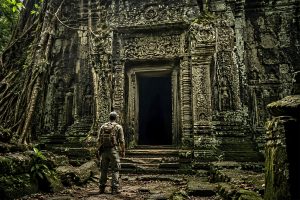
Across the world, ancient temples stand in deserts, forests, mountains, and isolated valleys. Some remain remarkably intact despite centuries of exposure to weather, war, and neglect. Others have been swallowed by vegetation or buried beneath layers of earth. Many continue to raise questions that historians cannot answer definitively.
Who built them? How were they constructed? Why were particular locations chosen? Why do some sites continue to attract stories of unusual experiences generation after generation? The answers cannot always be found through excavation alone.
The spirit said that the people who built these places possessed knowledge that extended beyond architecture. They understood astronomy, mathematics, ritual practice, and forces that modern society often dismisses without examination. Whether one agrees or not, it is difficult to ignore the precision found in many ancient structures. Some align with celestial events. Others were built in locations regarded as sacred long before written records existed.
Local traditions often preserve warnings about certain temples. Those elders speak of areas that should remain sealed. Some chambers are avoided even by those who live nearby. Stories vary from region to region, but a common theme appears repeatedly. There are places where disturbance brings consequences.
Modern observers frequently dismiss such accounts as folklore. The spirit was not so quick to do so. It believed that every culture preserves memories in its own way. Sometimes those memories survive through written records. Sometimes they survive through stories repeated across generations. When the same warnings endure for centuries, they deserve consideration rather than ridicule.
This does not mean that all exploration should cease. Human curiosity has uncovered remarkable knowledge about the past. Entire civilizations have been rediscovered through archaeological work. Ancient languages have been deciphered. Lost histories have been reconstructed. Yet the spirit maintained that discovery and restraint must exist together. Not every sealed chamber must be opened. Not every object must be removed. Not every mystery demands an immediate answer. Some places have endured for centuries without interference. Perhaps there was a reason for that.
Whether one accepts the spirit’s views or regards them as speculation, their warning remains simple. Ancient temples should not always be approached as empty monuments left behind by primitive people. They were created by human beings whose knowledge, beliefs, and intentions may be far more complex than we assume.Before entering such places, it may be worth considering that the builders understood exactly what they were doing, and that some of what they left behind was meant to remain where it was.
Related Posts