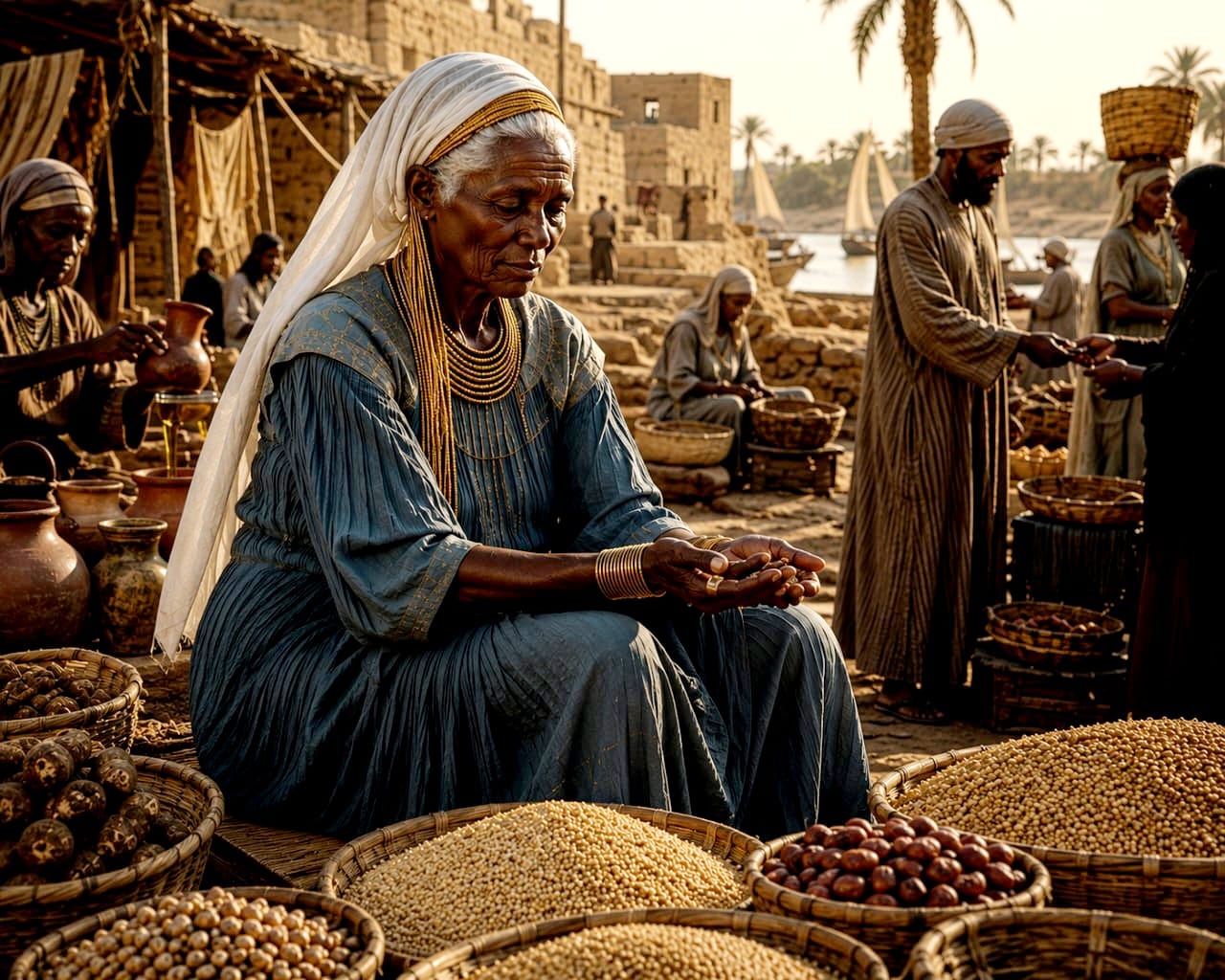
When men call women ‘witches,’” , “remember: Olodumare’s fire is neither kind nor cruel. It is justice.⚖️
The village labeled Ìfẹ́ “alájẹ” (witch), not for evil, but because her power refuses subjugation. Where men expect compliance and obedience Aje’s children demand equity. Ìfẹ́’s pots overflowed with stew for orphans, yet her threshold gathered no suitors. “Who’d wed a woman who bends the world gossiped the market women? The same ones who secretly bought her fertility charms.
Isolation, then, became her shadow. Not because Aje’s power doomed women to loneliness, It was because fear warped their sacredness into a myth. Men who conflate authority with arrogance flee from her; those who sought balance, like the drummer Ọlámidé, thrived beside her. He played rhythms to cool her storms, and in turn, her insights spared his village from drought.
Aje’s duality mirrors Ṣàngó’s lightning: it cuts down rotten branches to protect the forest. When a woman’s words seem to “harm” men, it is often Aje pruning what endangers the whole greed, deceit, or the rot of disrespect‼️ Yet mortal tongues, craving simplicity, call this “malevolence.”
In the end, Ìfẹ́ did not die alone. She became Ìyá Agbà, the elder whose (threshold) welcomed girls with Aje’s spark. She taught them to wield their breath not as weapons, but as scales. “When men call you ‘witch,’” she said, “remember: Olodumare’s fire is neither kind nor cruel. It is justice.⚖️
Adéwálé, humbled, built her a shrine not to placate her, it was to honor the equilibrium her presence demanded.
Related Posts

The Power Of Women: Part Two
This inherent power raises questions about accountability: Are some women…
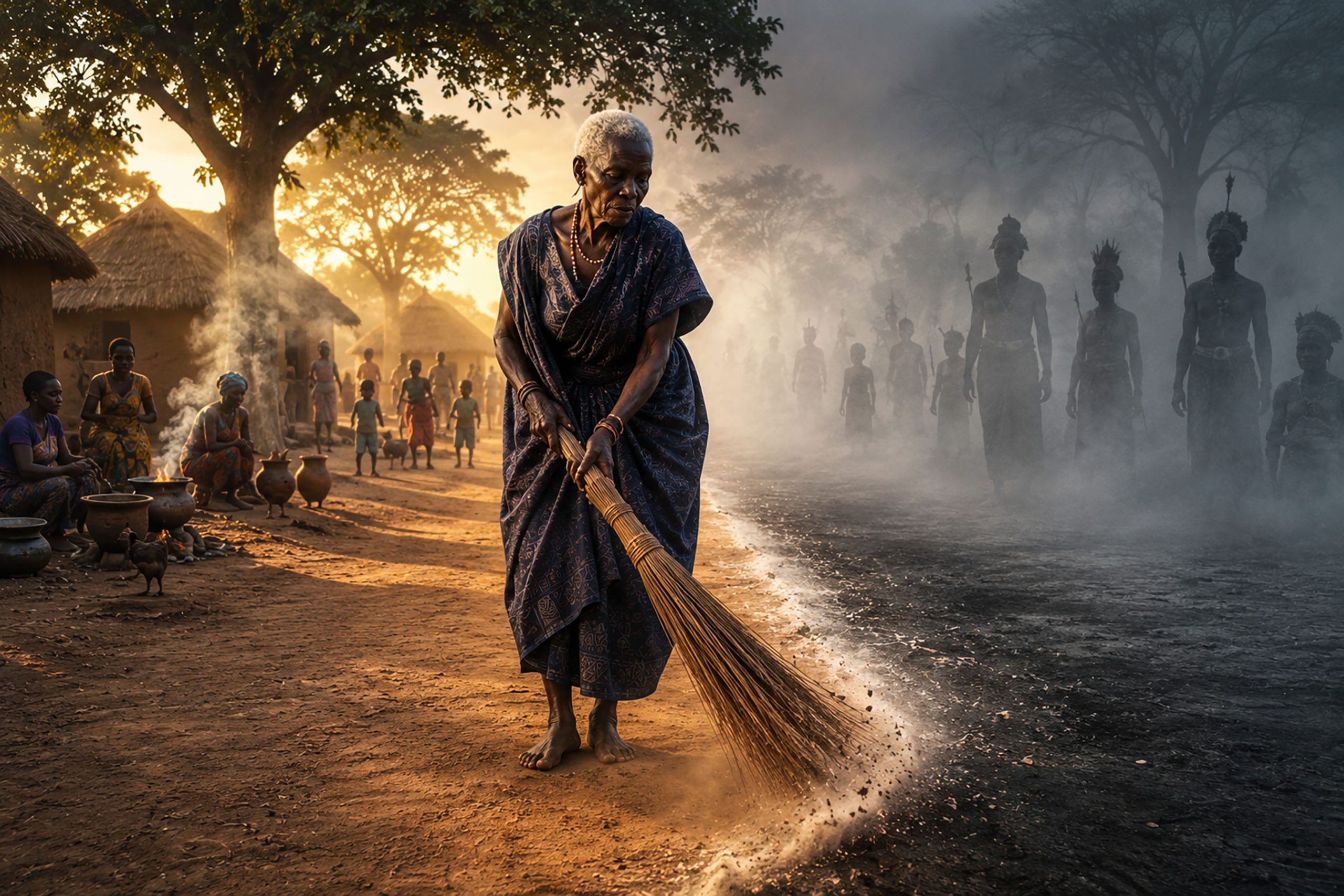
“Who is the lady that sweeps the path between the living and the dead?
Across many spiritual traditions, stories exist of…